Attachment-based therapy for the patterns you didn't choose.
For adults and couples ready to feel secure, not just understand it
I'm Dr. Anna Huang, a licensed clinical psychologist in Los Alamitos. Much of my work is with people who are capable, self-aware, and still repeat the same relational pattern — the reaching, the shutting down, the leaving before being left. Attachment theory explains how that pattern formed. Therapy is where it changes.
You are not too much, and you are not too cold.
These patterns aren't character flaws. They're strategies you learned early, in a family and a culture, to stay close to the people you needed — and they worked, once.
You reach, and then you panic
You reread the text. You ask for reassurance and hate how much you need it. The closer you try to get, the further away the other person seems to move — and then you wonder what is wrong with you for needing so much.
You need space, and then you miss them
When things get intense, something in you goes quiet and practical. You handle it alone. You tell yourself you're fine — and you usually are, until the loneliness catches up with you at night.
You keep meeting the same person in a new face
Intense chemistry, uncertain availability, a familiar ache. You call it spark. Sometimes it's recognition — of a dynamic you already know how to survive.
You're competent everywhere but here
You can run a team, a household, a whole life. And yet you can't seem to say the simple thing out loud, or ask for what you need without apologizing for it.
What attachment actually is — and isn't
Attachment describes how you learned, very early, whether it was safe to need someone. If your needs were met reliably, need itself felt ordinary. If they were met sometimes, or only when you were easy, or not at all, you built a strategy. Those strategies are often intelligent responses to the room you grew up in.
What attachment isn't: a personality type, a diagnosis, or a verdict. It's a set of learned moves. And that's the point of the phrase earned security: learned things can be learned again, in a relationship safe enough to practice in.
If you've taken one of those online quizzes and arrived with a label, that's a fine doorway. We won't stop there. Most people are a mix — anxious in love, avoidant at work, secure with one friend and flooded with a parent. The mix is where the real work lives.
Three patterns — and the direction out
I'm a therapist for anxious, avoidant, and disorganized attachment patterns — and for the couples who get caught between two of them. You'll probably recognize yourself in more than one. That's normal. The goal isn't to pick the right box. It's to see the pattern clearly enough to have a choice about it.
Anxious attachment
The reaching pattern. Your system treats distance as danger, so you move toward it — checking, explaining, asking, sometimes protesting. You're often the one who loves more visibly — and the one who feels ashamed of it. Underneath is a simple question: are you still there?
Avoidant attachment
The self-sufficient pattern. Needing someone starts to feel like a cost, so you deactivate: get practical, get busy, get space. You may look calm from outside while something underneath is working hard to stay contained. Your question is quieter: will this take something from me I can't afford?
Disorganized (fearful-avoidant) attachment
The push-pull. Closeness is wanted and simultaneously unsafe, often because early care was inconsistent or frightening. Relationships can feel intense and then suddenly too much. This pattern sometimes overlaps with trauma. I work with it carefully, and I refer out when someone needs a different kind of specialized care alongside.
Secure — the direction we work toward
Security isn't a personality you either have or don't. It's a set of experiences: being understood, staying through the fight, repairing afterward. Earned security gets built in pieces, usually in therapy, before it shows up in your life. That's the work, and it's possible from any of the three patterns above.
What attachment-based therapy looks like with me
This is psychodynamic therapy with an attachment lens. It's slower and deeper than skills training, and it isn't vague: we're looking at specific patterns, in specific moments, including the ones that happen between us.
Trace the pattern to its origins
We look at how your family, culture, and earliest relationships taught you what love requires — without turning anyone into a villain. Understanding where it came from doesn't cure it, but it ends the mystery.
Notice it live, between us
When the pattern shows up in the room — you feel misread, you want to disappear, you rush to fix — we slow it down and look at it together. That moment is the most useful material we have.
Practice something new, and stay
Security is built by doing the unfamiliar thing and surviving it: saying the need, hearing the no, repairing after the rupture. Week by week, it becomes trust you can feel.
Individuals, couples, and the space between
I see adults individually and couples together. Individually, we work on your own pattern and how it shapes love, friendship, family, and work. As a couple, we work on the dance between you — who moves toward, who moves away, and what each of you is protecting. Both formats use the same lens; both are slow, honest, and relational.
Many of my clients are high-achieving professionals who have optimized everything except this. Many are second-generation Asian American, carrying family duty and immigrant expectations that make needing someone feel like a betrayal of everything they were raised to be. If that's you, we'll name it — the culture is part of the pattern, never the whole story.
If you're unsure whether you need individual or couples work, bring that uncertainty to the consultation. We'll figure out the right starting point together.
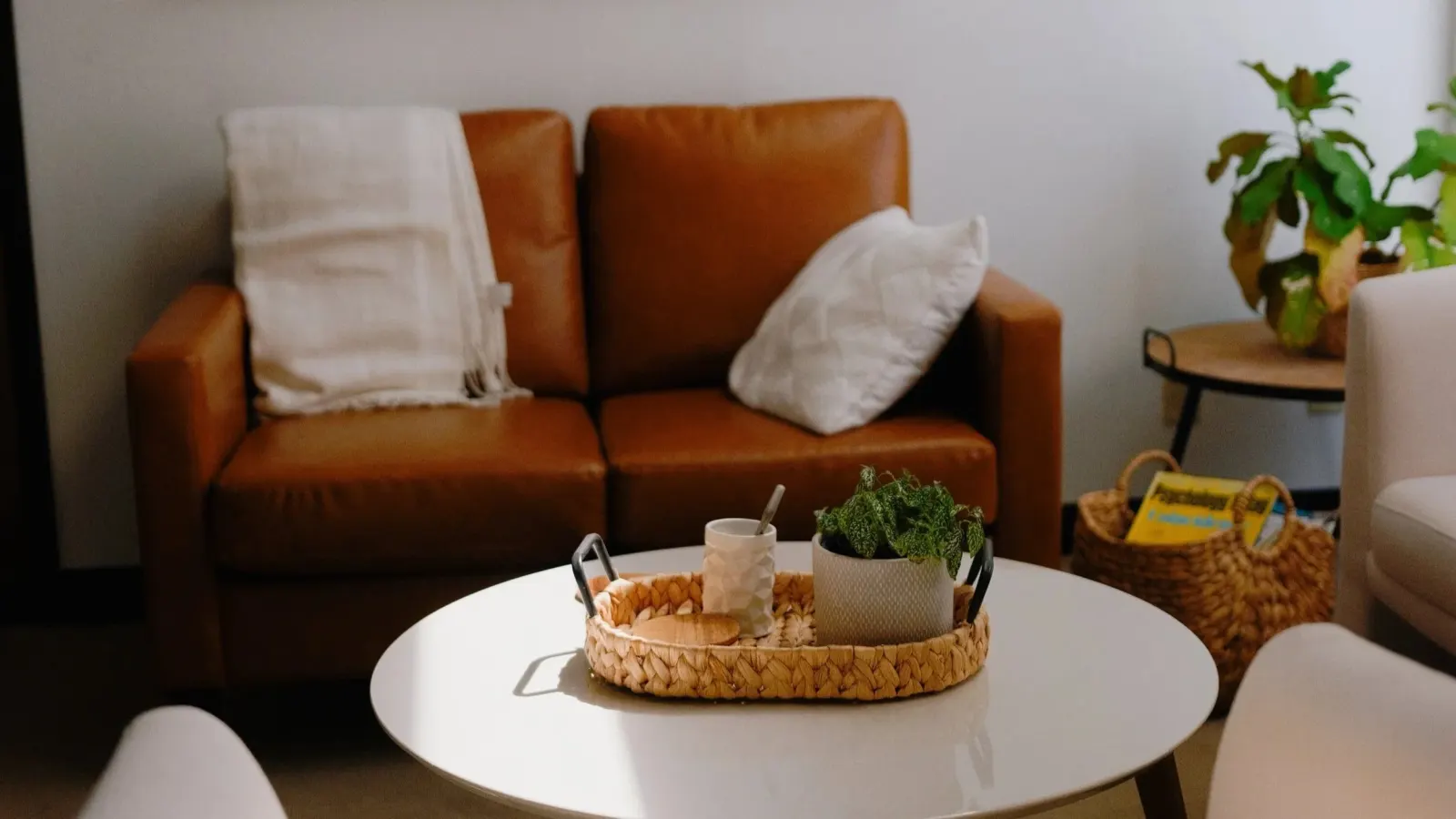
A quiet room, close to home
The office is on Katella Avenue, Suite 202 — the stretch where Los Alamitos, Rossmoor, and Cypress run into each other. Most clients come from a ten-minute radius: an hour carved out of a lunch break, or the tail end of a workday that started early. The lot is free, and the waiting room sits out of sight of the street, so the hour feels like yours before it begins.
For weeks when the drive doesn't fit, I see clients virtually anywhere in California; some people alternate. Either way the hour is the point — the work happens in the relationship, and a relationship needs a rhythm.
Questions people ask about attachment styles
Can your attachment style actually change?
Yes. Attachment research calls it earned security: the patterns you learned early can be revised through new relational experience, and therapy is one place that happens. It isn't a switch. It's slow and uneven — built in moments of being understood and choosing to stay. But it's real, and it's the reason I do this work.
Do I need to know my attachment style before I come in?
No. The assessment happens in the room, not on a quiz. We look at specific moments — how you respond when someone gets close, what you do when you're hurt, where the same ending keeps arriving from a different beginning. Most people are a mix, and the mix matters more than the label. By the time a name fits, you'll have watched it happen rather than read it off a chart.
Is this individual therapy or couples therapy?
Both. Attachment patterns are personal, so individual work traces your own history and how it shows up in love, work, and friendship. Couples work looks at the dance between two people — often one who reaches and one who retreats. Sometimes one partner starts individual work first, and that's a perfectly good place to begin.
How is attachment-based therapy different from regular talk therapy?
In ordinary talk therapy you describe what happened out there. In attachment-based work, the relationship in the room becomes part of the material: when you feel misunderstood here, or want to disappear here, that's data, not a detour. We slow those moments down and practice something new. It's less worksheet, more lived experience — which is why it changes things insight alone never touched.
Is attachment theory real, or just internet psychology?
The core of it is a serious research tradition going back to Bowlby and Ainsworth, with decades of adult attachment research behind it. Social media flattens it into memes and labels, and the flattening is what people rightly distrust. I use attachment as a clinical lens, not a horoscope: it explains how you learned to stay safe, and it points to what has to be experienced rather than merely understood.
We're the classic anxious-avoidant couple. Can this help?
That pairing is most of the couples work I do. One partner moves toward the problem and the other moves away from it, and both end up confirming each other's worst fear. The important shift is seeing it as one pattern the two of you built together rather than one good guy and one bad guy. Once it's visible, it becomes something you can interrupt instead of something that happens to you.
Is attachment-based therapy covered by insurance?
I am an out-of-network provider. Individual sessions run 50 minutes, weekly, at $215. Many PPO plans reimburse 60–80% of that after your deductible, and I give you a monthly superbill to submit. If the numbers are a concern, raise it in the free consultation — better to know now than to guess.
How do we start?
Schedule a free 15-minute consultation. It's a short, low-pressure conversation where you can say what's happening and I'll tell you honestly whether I'm the right fit. If it feels right, we choose a weekly time and begin.
The first step is a conversation.
Fifteen minutes, free, no forms to fill out first. You describe what's been happening; I tell you honestly whether I'm the right fit. If I'm not, I'll point you somewhere better.